
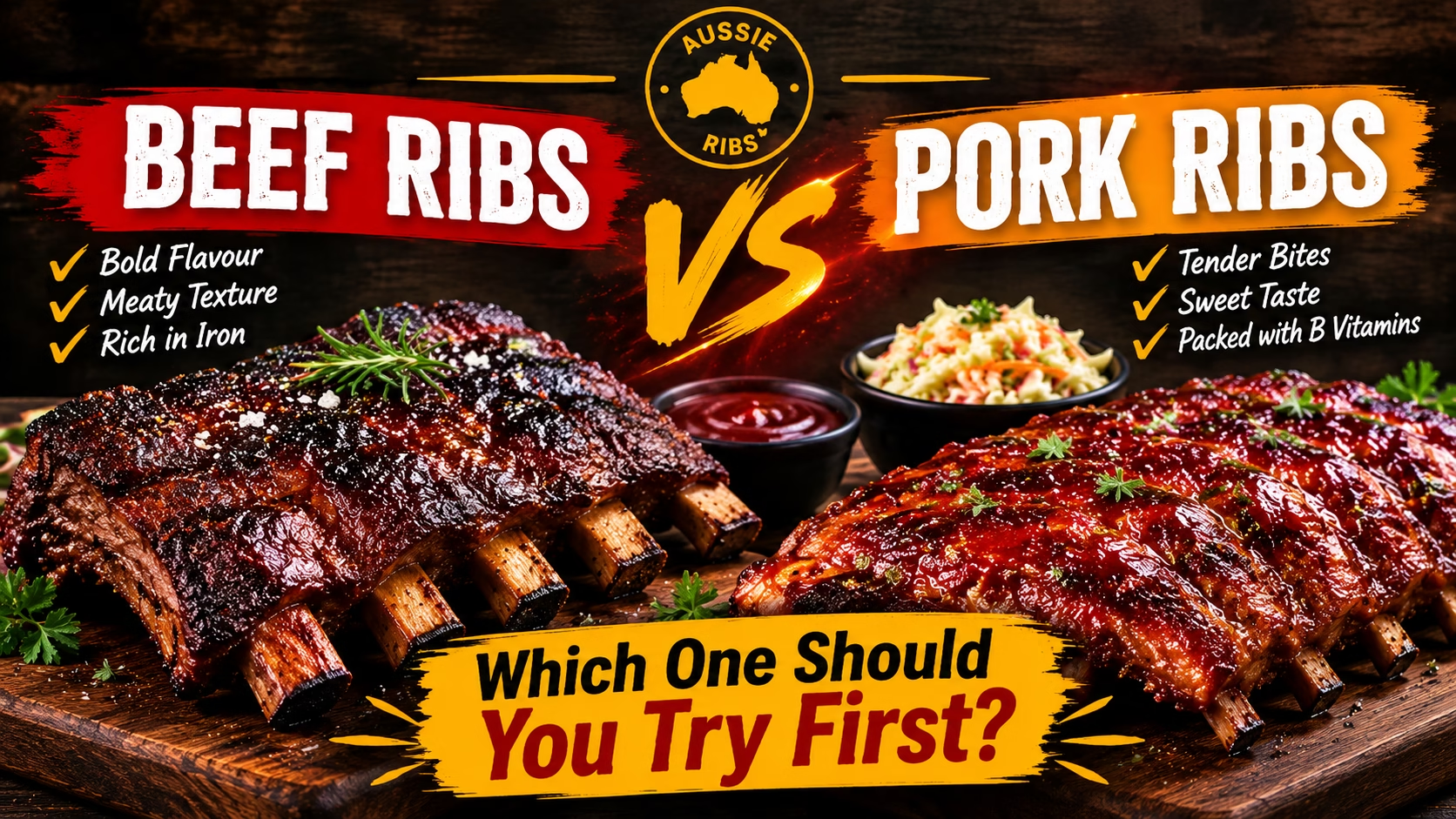
Choosing between beef ribs and pork ribs is one of the most exciting decisions you can make when visiting a premier Australian steakhouse. Both options deliver extraordinary tenderness, rich flavours, and that satisfying sizzle straight off the grill. However, the distinct differences in texture, cut size, and natural fat distribution mean that each variety offers a unique culinary experience. Furthermore, understanding the nutritional profile of each meat helps you align your dining choices with your personal health goals. Whether you are planning a weekend family feast, a quick lunch special, or a relaxed dinner with friends, understanding what sets these two popular styles apart helps you pick the perfect plate. At Aussie Ribs, our pitmasters take pride in preparing high-quality meats to perfection, ensuring every guest enjoys an unforgettable meal.
Understanding the Fundamental Differences
While both beef and pork ribs are staples of classic barbecue culture, their physical characteristics and nutritional profiles vary significantly. The most immediate difference lies in their size. Beef ribs come from much larger animals, resulting in massive, meat-heavy bones that make a bold visual statement on your plate. Conversely, pork ribs are naturally smaller, offering delicate, tender cuts that absorb marinades and spice rubs exceptionally well.
Beyond their physical size, the fundamental difference comes down to flavour intensity, fat rendering, and macronutrient composition:
- Beef Ribs: Known for their robust, deeply savoury taste and dense muscular structure, beef cuts feature extensive marbled fat that melts slowly during cooking while supplying high levels of dietary iron and protein.
- Pork Ribs: Renowned for their mild, slightly sweet natural profile, pork cuts present a lighter meat texture that pairs effortlessly with tangy sauces while providing a rich source of B-complex vitamins.
While these two options represent traditional grill favourites, great steakhouses also recognise that personal dietary preferences vary. Whether due to specific food allergies, health considerations, or religious dietary choices, many diners prefer alternative options. A quality bar and grill ensures that everyone at the table enjoys a fantastic meal by offering diverse menus, including lamb ribs, grilled chicken, fresh seafood, and vegetarian choices.
Nutritional Benefits of Beef Ribs
Beef ribs offer more than just an exceptional flavour experience. As a nutrient-dense protein source, high-quality beef supplies essential building blocks that support overall physical health and daily energy levels.
High-Quality Protein and Amino Acids
Beef is a complete protein source, meaning it provides all nine essential amino acids that your body cannot produce on its own. These amino acids are vital for muscle repair, immune function, and cellular maintenance. Consequently, enjoying a hearty portion of beef ribs after an active day provides the nutritional support your muscles need for recovery.
Essential Vitamins and Minerals
Beef is exceptionally rich in key micronutrients that support metabolic health:
- Iron: Beef contains high amounts of heme iron, which is absorbed much more efficiently by the human body than plant-based non-heme iron. Heme iron plays a critical role in preventing fatigue and maintaining healthy red blood cell counts.
- Zinc: This essential mineral supports immune function, wound healing, and cellular metabolism.
- B Vitamins: Beef is packed with Vitamin B12, niacin, and riboflavin, which help convert food into usable cellular energy and support nervous system health.
Nutritional Benefits of Pork Ribs
Pork ribs offer a slightly different nutritional profile that makes them a wonderful addition to a balanced diet when enjoyed in moderation.
Complete Protein and Healthy Fats
Like beef, pork is a rich source of complete animal protein necessary for tissue growth and repair. While ribs naturally contain higher fat levels than lean cuts like chicken breast or pork loin, this fat content contributes directly to the rich texture and satiety of the meal. Moderate fat consumption helps slow digestion and provides a steady release of sustained energy.
Abundant B-Complex Vitamins
Pork is particularly celebrated for its high concentration of specific B-complex vitamins:
- Thiamine (Vitamin B1): Pork stands out as one of the best natural dietary sources of thiamine. This vitamin is essential for turning carbohydrates into energy and supporting proper nerve, muscle, and heart function.
- Selenium: Pork provides significant amounts of selenium, a powerful antioxidant mineral that protects cells from oxidative damage and supports thyroid health.
Comparing Key Dining Factors
To help you decide which option to order during your next meal, it helps to weigh their characteristics directly against your personal dining preferences and nutritional goals.
Size and Portion Weight
If you arrive at the restaurant with a massive appetite, beef ribs provide a substantial, nutrient-dense meal that satisfies serious meat lovers. However, if you prefer a manageable portion size or want to leave room for entrees and desserts, a rack of pork ribs offers a balanced, comfortable dining experience.
Eating Style and Texture
Pork ribs generally offer a softer, melt-in-your-mouth feel that yields easily with every bite. Beef ribs provide a meatier, denser texture that feels incredibly satisfying. Both options are traditionally enjoyed with your hands, making rib dining an interactive, relaxed experience for the whole table.
Dining Options at Aussie Ribs
Whether you prefer the bold intensity of beef or the sweet tenderness of pork, achieving optimal flavour requires expert preparation. At Aussie Ribs, our kitchen team utilises specialised slow-cooking techniques followed by high-heat flame grilling to lock in natural juices and create a delicious caramelised exterior crust.
For guests exploring local dining options in Western Australia, our venues provide relaxed environments perfect for any occasion:
- Fremantle Location: Situated in a historic coastal hub, our venue offers a vibrant atmosphere ideal for family gatherings, casual weekend catch-ups, or a rewarding lunch after exploring the local markets.
- Ascot Location: Conveniently located near Perth Airport, our Ascot location is the perfect spot for corporate lunches, transit travellers seeking a hearty meal, or locals enjoying our daily food specials.
If you are dining with a group of friends or family members who hold different dietary preferences or religious guidelines, our diverse menu ensures nobody feels left out. Alongside our signature rib racks, guests can choose from premium grain-fed steaks, tender lamb cuts, succulent grilled chicken breasts, and crisp vegetarian salads. You can view our full menu and daily dining offers by visiting our Aussie Ribs home page.
The Verdict: Which One Should You Order First?
Deciding which rib style to try first ultimately comes down to your personal taste preferences, nutritional priorities, and hunger levels.
You should choose beef ribs first if:
- You prefer deep, rich, steak-like savoury flavours and want a high iron intake.
- You enjoy larger, meatier portions with a firm, juicy texture.
- You want a heavy, ultra-satisfying meal to fuel a big appetite.
You should choose pork ribs first if:
- You prefer light, tender meat that falls away from the bone effortlessly.
- You want an excellent dietary source of thiamine and B-complex vitamins.
- You love traditional sticky barbecue sauces and want a classic, easily manageable portion.
Whichever style you choose for your initial visit, trying both varieties over time allows you to appreciate the unique craftsmanship and nutritional benefits behind each dish. Gather your family, bring your friends, and visit your nearest steakhouse location to enjoy an outstanding dining experience today.